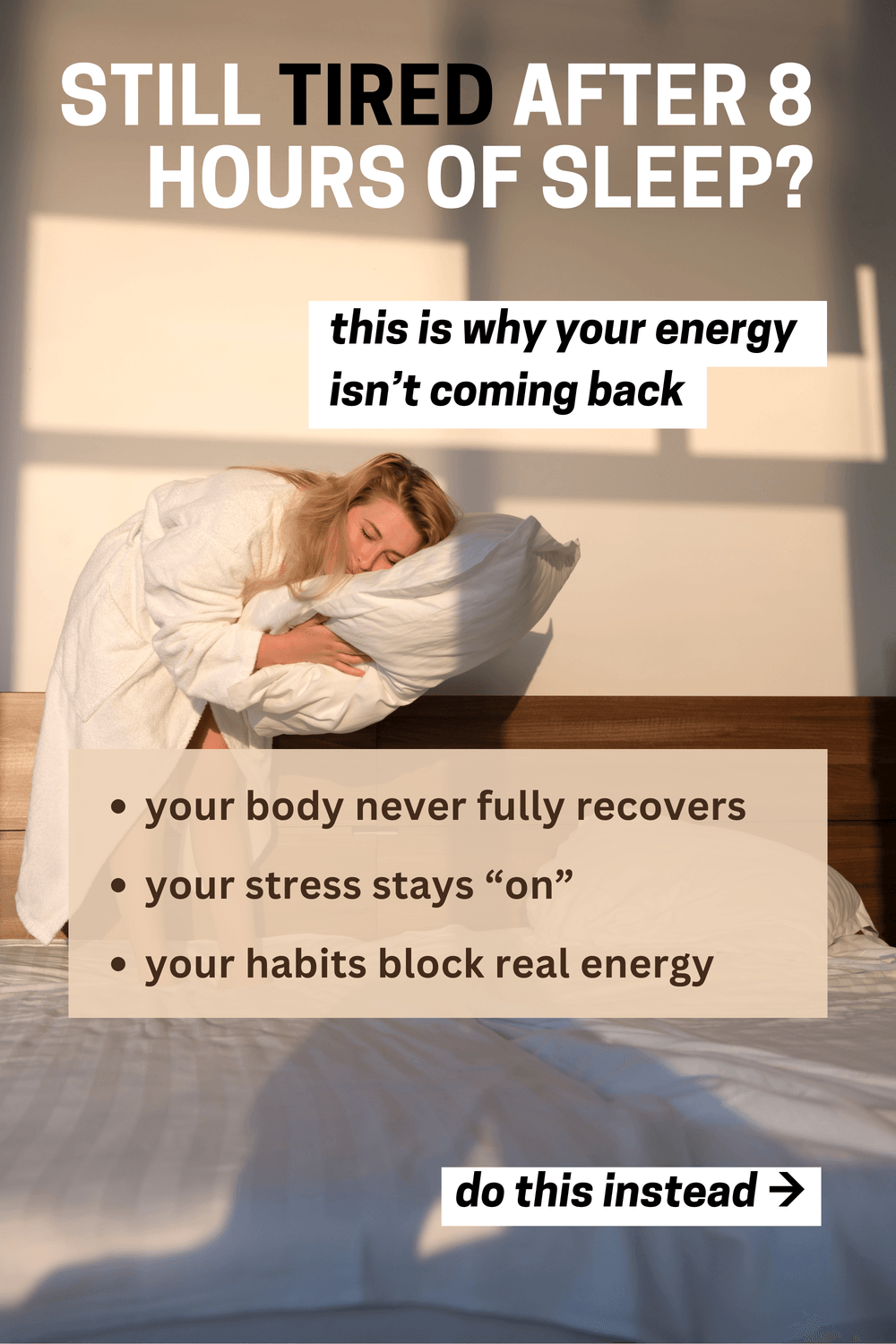
Why You Wake Up Tired Even After 8 Hours of Sleep
Why You Wake Up Tired Even After 8 Hours of Sleep (And What to Do the Next Morning)
If you slept for 8 hours but still woke up tired, you’re not imagining it.
A full night in bed doesn’t always mean your body got the deep, restorative rest it actually needed.
You can be asleep for “long enough” and still wake up feeling foggy, heavy, drained, or low on energy.
And for many women, it’s not just about bedtime.
It’s about sleep quality, stress, nervous system overload, and what happens the next morning too.
You may be sleeping — but not fully recovering
Sometimes the issue isn’t how long you slept.
It’s that your body stayed a little too alert during the night.
When your system feels stressed, overstimulated, or “on,” your brain may not fully settle into the kind of sleep that leaves you feeling refreshed.
That can look like:
waking up feeling exhausted
feeling groggy even after 8 hours
brain fog in the morning
needing caffeine immediately
feeling tired all day, but wired again at night
In other words: your body rested, but didn’t fully recover.
A few reasons this can happen
1. Your nervous system never fully switched off
If your mind was racing before bed, or your body felt tense at night, you may have slept lightly instead of deeply.
2. Your sleep quality was off
You may have been sleeping, but not getting enough truly restorative sleep. Even small disruptions can leave you feeling tired the next morning.
3. Stress follows you into the morning
Poor sleep doesn’t just affect the night. It can change how you feel when you wake up too — lower energy, more cravings, more irritability, and less focus.
4. Your morning routine makes it worse
The first hour of your day can either support your energy or quietly drain it even more.
That’s why what you do after a tired morning matters so much.

You’re not lazy.
You may just be
under-recovered.
What to Do the Next Morning If You Wake Up Exhausted
You don’t need a perfect routine.
You just need a few supportive habits that help your body feel safer, steadier, and a little more energized.
1. Drink water before anything else
After a full night of sleep, your body is already slightly dehydrated. Starting the day with water can help you feel more awake and clear-headed.
This is one of the simplest habits, but it makes a bigger difference than most people think.
2. Get outside light as early as you can
Morning sunlight helps your body feel more awake and grounded. Even a few minutes outside or near a bright window can help support your natural rhythm.
If you feel groggy, low, or mentally foggy in the morning, this is one of the first things to try.
3. Eat something nourishing
If you tend to skip breakfast and rely on coffee alone, that can make low energy feel worse.
A simple protein-rich breakfast can help support steadier energy through the morning and reduce the crash-and-crave cycle later in the day.
Think simple:
eggs
Greek yogurt
chia pudding
oats with protein
toast with nut butter and fruit
Here's something I personally like on low-energy mornings.
4. Don’t overload your body right away
If you woke up exhausted, you probably don’t need to “push through” with intensity first thing.
Instead of doing everything at once, try:
one small task
a gentle stretch
a short walk
a slower start
fewer notifications
Low-energy mornings usually respond better to support than pressure.
5. Delay caffeine just a little if you can
If coffee on an empty stomach makes you feel shaky, anxious, or crashed later, try having it after water and food instead.
This small shift can feel much gentler on tired, stressed mornings.
6. Keep the day lighter when possible
If you wake up tired after 8 hours of sleep, your body may be asking for more recovery - not more punishment.
That doesn’t mean doing nothing. It just means choosing the basics:
hydrate
eat regularly
get light movement
reduce overstimulation
go to bed earlier that night
The goal isn’t perfection — it’s better recovery
If you keep waking up tired, it doesn’t automatically mean something is “wrong” with you.
Sometimes it simply means your body needs more support than sleep duration alone can give.
Better mornings often start with:
better sleep quality
a calmer evening routine
less stress overload
more gentle morning habits
Small changes can make a real difference over time.
And if you’ve been feeling tired no matter how much you sleep, start with the basics first: water, light, nourishment, and a slower morning rhythm.
That’s often where energy starts coming back.
If you slept 8 hours and still woke up exhausted, don’t ignore it.
Your body may be asking for recovery in a different way.
Start small. Keep it simple. Support your mornings gently.
Want more simple habits that support better sleep, calmer energy, and less morning exhaustion?
Read next: [Simple Habits That Can Change Your Energy]
SAVE THIS PIN FOR LATER
Written by: Petra
This content is for educational purposes only and is not intended as medical advice.