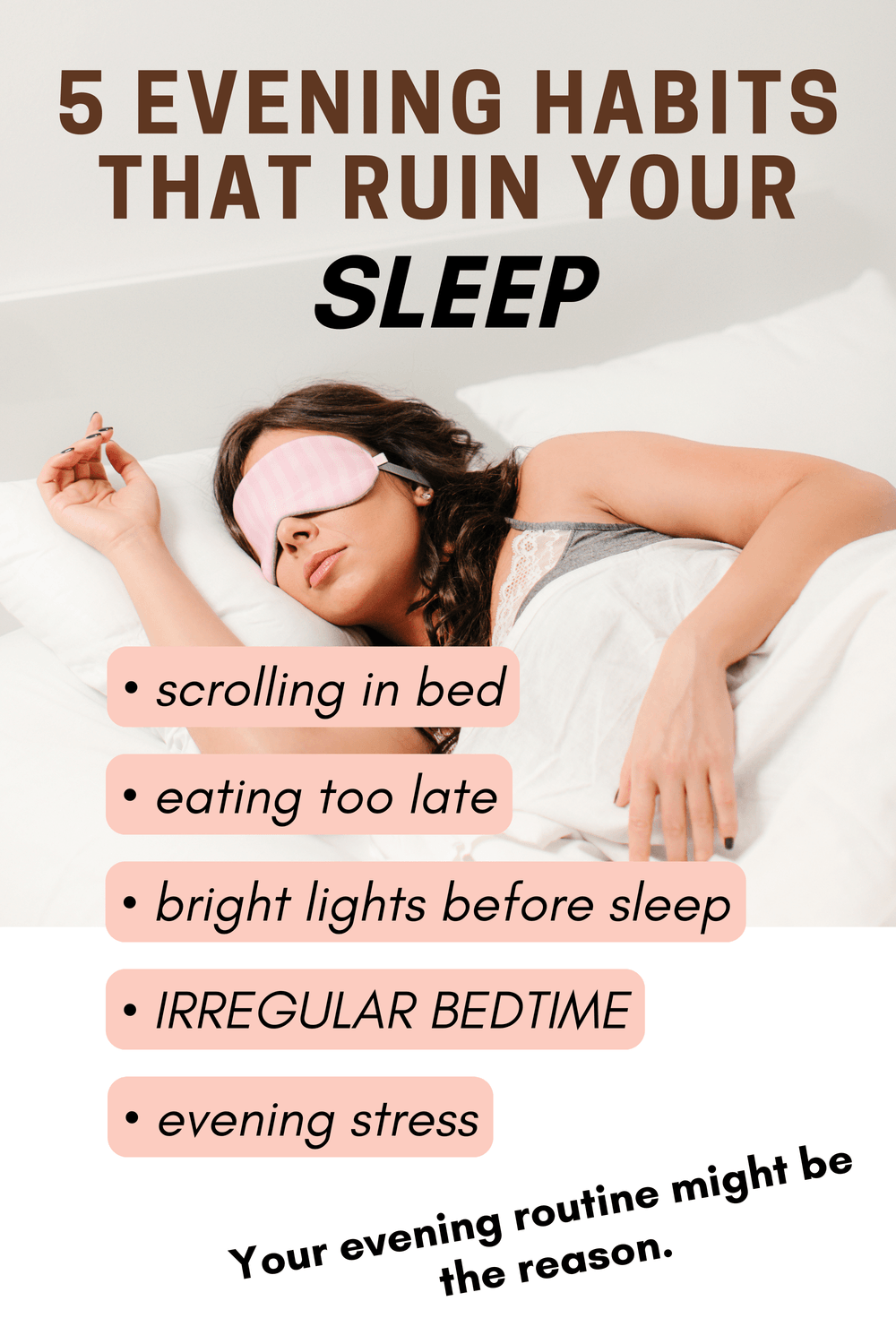
Evening Habits That Are Quietly Destroying Your Sleep
If you struggle to fall asleep…
wake up during the night…
or feel tired no matter how long you sleep…
👉 your evening routine might be the reason.
And the truth is -
👉 most people don’t even realize they’re doing these things.
This isn’t just “bad sleep”
Your body doesn’t randomly sleep poorly.
👉 It reacts to what you do in the evening.
Small habits before bed can:
keep your brain alert
disrupt your hormones
prevent deep, restorative sleep
Signs your evening routine is affecting your sleep
you feel tired but can’t fall asleep
your mind keeps racing at night
you wake up during the night
you don’t feel rested in the morning
👉 If this sounds familiar, your body is not fully winding down.

1. Using your phone right before bed
Scrolling, texting, or watching videos might feel relaxing…
👉 but it keeps your brain active.
Even more importantly:
Blue light from screens can suppress melatonin, the hormone that helps you fall asleep.
💥 Result:
harder to fall asleep
lighter sleep
more night wake-ups
2. Not having a real wind-down routine
Going from:
👉 busy → stressed → straight to bed
…doesn’t give your body time to relax.
Your nervous system needs a signal that it’s safe to rest.
Without it:
your body stays alert
your mind stays active
3. Too much stimulation in the evening
Late-night:
social media
work
emotional content
👉 keeps your brain in “on mode”
And your brain doesn’t instantly switch off just because you go to bed.
💥 This often leads to:
overthinking
anxiety at night
waking up around 2–4AM
4. Bright lights late at night
Light exposure in the evening can confuse your body.
👉 your brain thinks it’s still daytime
This can:
delay melatonin release
disrupt your circadian rhythm
reduce sleep quality
Research shows that blue light at night can suppress melatonin even more strongly than other light types
5. Going to bed already stressed
If you go to bed with:
racing thoughts
stress
unresolved tension
👉 your body won’t fully relax.
Even if you fall asleep, your sleep may stay:
light
fragmented
non-restorative
This is where most people get stuck…
They try to fix sleep by:
going to bed earlier
forcing themselves to sleep
👉 but they ignore what happens BEFORE bed.
What actually helped me
For a long time, I thought I just had “bad sleep.”
But the real problem was my evening routine.
I was:
overstimulated
stressed
constantly on my phone
👉 my body never fully switched off.
When I started supporting my body differently, I noticed:
falling asleep faster
fewer night wake-ups
deeper, more restful sleep
👉 If you’re curious, you can check what helped me here.
What to do instead
Instead of forcing sleep, focus on calming your body.
👉 Try:
reducing screen time before bed
dimming lights in the evening
creating a simple wind-down routine
avoiding stimulating content
Even small changes can significantly improve your sleep.
The bottom line
Your sleep doesn’t start when you go to bed.
👉 It starts hours before.
Your evening habits directly affect:
your hormones
your nervous system
your sleep quality
You don’t have to struggle with sleep every night
Better sleep is possible. With the right habits - and the right support - your body can finally relax and rest deeply.
SAVE THIS PIN FOR LATER
This content is for educational purposes only and is not intended as medical advice.